






 Strains
 Guide
Guide Strumenti
 Supporto





Risoluzione dei problemi
Il kit per la coltivazione dei funghi non produce frutti? Ecco come individuare il problema e risolverlo
Un kit di coltivazione che non entra in fase di fruttificazione è la preoccupazione più comune che sentiamo esprimere dai coltivatori, e nella stragrande maggioranza dei casi il kit funziona perfettamente. La maggior parte dei kit “bloccati” è semplicemente in anticipo o si trova in condizioni leggermente fuori norma rispetto a una delle quattro variabili. Questa guida ti illustra l’esatta sequenza diagnostica che seguirebbe un coltivatore esperto: prima verifica i tempi, poi controlla le quattro condizioni di fruttificazione, quindi esclude contaminazione, e solo allora provare a riavviare il kit.
Procedi in ordine. Non passare subito a “riattivare” un kit che in realtà è in anticipo di soli tre giorni.
Innanzitutto, il tuo kit è davvero bloccato?
Prima di apportare qualsiasi modifica, assicurati che la tua coltura sia effettivamente in ritardo rispetto al programma e non semplicemente in anticipo. La pazienza è la soluzione più sottovalutata nella coltivazione.
Dopo aver avviato un kit in condizioni ottimali, i primi germogli (minuscoli primordia fungini, spesso sotto forma di piccole protuberanze bianche) compaiono in genere entro circa 7-14 giorni, a seconda del ceppo e delle condizioni ambientali. Le stanze più fredde ritardano questo processo. Se un kit non ha ancora sviluppato i primi germogli entro il quinto giorno, non c'è da preoccuparsi: è normale.
Usalo come modello mentale di massima:
- Puntuale / pigro: Non ci sono ancora spilli, ma siamo ancora entro circa una settimana dalla finestra temporale normale per la comparsa del primo spillo per la tua varietà. Continua a seguire le istruzioni e controlla ogni giorno. Non fare nient’altro.
- Insoddisfatto: Nessuna spilla fino a circa 14 giorni dopo il periodo previsto. Quasi sempre si tratta di un problema legato alle condizioni ambientali (temperatura, aria fresca o luce). Risolvi i problemi indicati di seguito.
- Sonno: nessun pin che superi di circa tre settimane il periodo previsto, senza segni visibili di contaminazione. È in questi casi che è giustificato ricorrere a una procedura di riattivazione.
Se ti trovi ancora all’interno della finestra “lazy”, fermati qui e attendi. Altrimenti, prosegui.
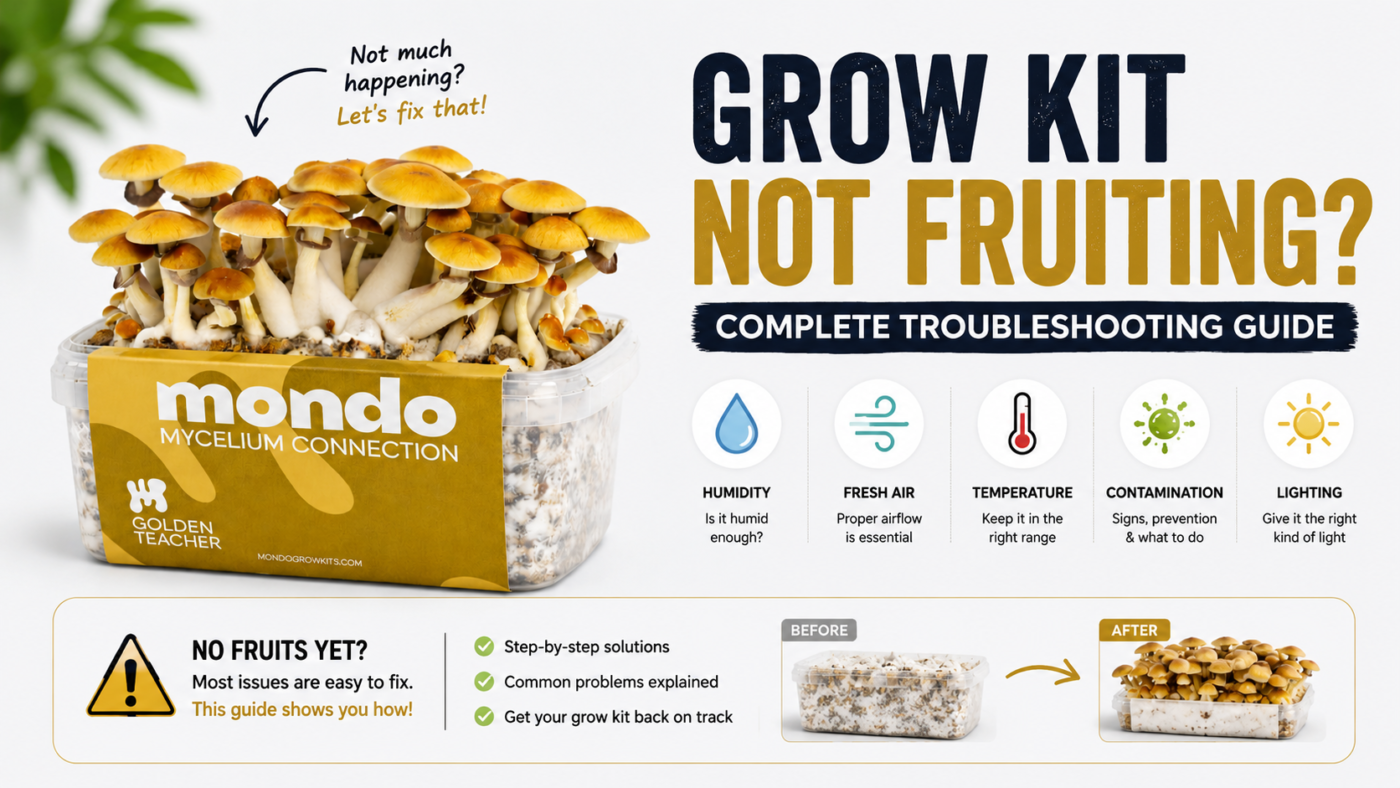
Le quattro condizioni indispensabili affinché ogni kit dia i suoi frutti
La fruttificazione è innescata da una combinazione di fattori, non da uno solo. Quando un kit completamente colonizzato (il substrato è ricoperto di micelio bianco) non produce spore, la causa è quasi sempre una di queste quattro. Controllale in questo ordine.
1. Temperatura
Questo è il motivo più comune per cui un kit colonizzato smette di produrre. La maggior parte dei kit di Psilocybe cubensis produce al meglio a temperature comprese tra i 20 e i 28 °C circa, con una temperatura ottimale intorno ai 23 °C. Al di sotto di circa 18 °C, il micelio rallenta drasticamente o entra in fase di dormienza. Temperature troppo elevate possono favorire la proliferazione batterica e causare un'essiccazione più rapida del substrato.
Misurate la temperatura il più vicino possibile al kit, non in altri punti della stanza. Se utilizzate un tappetino riscaldante, non appoggiate mai il kit direttamente su di esso. Utilizzate invece un supporto, come un pezzo di cartone, sughero o una piccola griglia, poiché il contatto diretto può surriscaldare la base del substrato.
2. Ricambio d'aria (FAE)
Il micelio consuma ossigeno e rilascia anidride carbonica (CO₂), proprio come gli esseri umani. Livelli elevati di CO₂ sono una delle cause più comuni per cui un kit non attecchisce o produce funghi lunghi e sottili con cappelli minuscoli. Se i tuoi funghi crescono alti e sottili, la causa è solitamente la mancanza di aria fresca.
La soluzione consiste nel migliorare la circolazione dell'aria senza far seccare il kit di coltivazione. Aprire il sacchetto di coltivazione solo secondo le istruzioni del produttore e continuare a utilizzare il sacchetto originale fornito con il kit, poiché è progettato per garantire l'equilibrio tra umidità e scambio gassoso. Aprire il sacchetto troppo spesso o per troppo tempo può seccare la superficie e aumentare il rischio di contaminazione. L'aria fresca e l'umidità devono rimanere in equilibrio.
3. Umidità
Il micelio assorbe l'umidità dall'aria circostante, non solo dal substrato. Se la superficie si secca, i germogli possono appassire rapidamente. L'obiettivo è mantenere un microclima umido senza che l'acqua ristagni sul substrato. La condensa all'interno del sacchetto di coltivazione è normale e, in genere, è un buon segno.
Se la superficie appare asciutta, crea una semplice copertura umidificante coprendo il kit con un sacchetto di plastica trasparente dotato di alcuni piccoli fori di ventilazione. Nebulizza l'interno del sacchetto anziché spruzzare direttamente sul substrato. Di solito è sufficiente nebulizzare leggermente due o tre volte al giorno. Non lasciare mai che l'acqua ristagni sulla superficie, poiché ciò indebolisce il substrato e favorisce la contaminazione.
4. Luce
Sebbene i funghi non effettuino la fotosintesi, i funghi commestibili utilizzano la luce come stimolo per orientarsi e per la fruttificazione. Posiziona il kit di coltivazione alla luce indiretta del sole e mantieni un normale ciclo giorno-notte. L’ideale è una mensola o un tavolo in una stanza illuminata naturalmente.
Evitare l'esposizione diretta alla luce solare, che può surriscaldare il kit, seccare il substrato e causare forti sbalzi di temperatura. È inoltre opportuno evitare l'oscurità totale, poiché inibisce uno dei fattori ambientali necessari per la fruttificazione.
Come interpretare il kit: micelio sano contro contaminazione
Prima di provare a ripristinare un kit di coltivazione, è necessario escludere la presenza di contaminazione. Un kit contaminato non può essere recuperato e non deve essere riutilizzato. Fortunatamente, molti coltivatori scambiano il micelio sano per muffa.
- Formazioni bianche, soffici o filiformi: Questo è un micelio sano. Può assomigliare al cotone idrofilo oppure assumere un aspetto lanuginoso, simile a un cavolfiore, poco prima della formazione dei capolini.
- Goccioline di liquido di colore giallo, ambra o marrone: Si tratta di metaboliti, talvolta definiti “urina dei funghi”. Sono innocui e spesso indicano che il substrato è maturo e si sta preparando alla fruttificazione.
- Macchie blu, verdi, nere o grigie: La presenza di una patina colorata e lanuginosa è solitamente indice di contaminazione da muffa. Un kit in cui sia presente muffa verde o nera, oppure che emani un odore acido, di muffa o sgradevole, deve essere smaltito immediatamente. Contatta il tuo fornitore per assistenza.
Una semplice regola empirica: se è bianco e inodore, in genere è sano, mentre la presenza di escrescenze colorate o di odori sgradevoli indica una contaminazione. In caso di dubbi, scattate una foto nitida e contattate l’assistenza prima di maneggiare ulteriormente il kit, poiché smuovere un substrato contaminato può causare la diffusione spore.
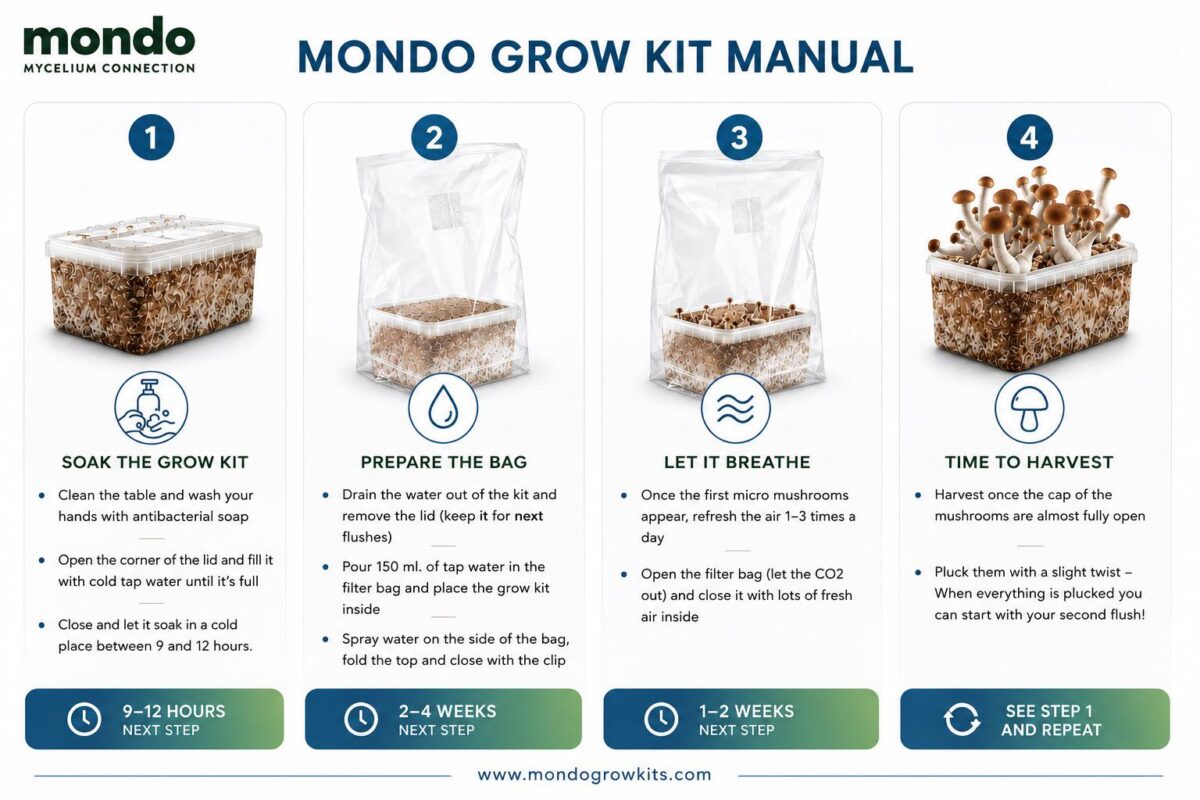
Come svegliare un kit addormentato
Prova questi metodi solo se il tuo kit di coltivazione si trova effettivamente nella fase di “letargo” (ben oltre il periodo previsto per la formazione dei germogli) e se hai verificato che non vi siano tracce di contaminazione. Prova una tecnica alla volta, attendi diversi giorni affinché faccia effetto e passa al metodo successivo solo se necessario.
-
Verifica nuovamente le quattro condizioni per la fruttificazione.
La temperatura, l'umidità, l'aria fresca e la luce sono le cause principali dei ritardi nella crescita dei kit di coltivazione. Risolvi eventuali problemi e attendi da tre a quattro giorni prima di intraprendere ulteriori azioni. -
Shock da freddo.
A volte un calo temporaneo della temperatura può innescare la fruttificazione. Metti il kit di coltivazione chiuso in frigorifero (mai nel congelatore) per circa 12 ore, poi riportalo alle normali condizioni di fruttificazione. Questo riproduce le variazioni stagionali di temperatura che spesso innescano la fruttificazione in natura. -
Aumentare il ricambio d'aria fresca.
Effettua ogni giorno alcuni ricambi d'aria controllati in più, seguendo le istruzioni fornite con il tuo kit di coltivazione. Questo aiuta a rimuovere la CO₂ accumulata e segnala al micelio che le condizioni sono adatte alla fruttificazione. -
Se consentito, reidratare il substrato.
Alcuni kit di coltivazione a forma di torta rispondono bene a un'attenta reidratazione. Eseguire questa operazione solo se espressamente raccomandata nelle istruzioni del produttore. Utilizzare sempre acqua pulita e osservare le norme igieniche, poiché la reidratazione aumenta il rischio di contaminazione.
Siate pazienti dopo aver applicato un metodo di recupero. Una volta che inizia la formazione dei germogli, la crescita a fungo può accelerare rapidamente, e anche un kit in ritardo può comunque produrre un ottimo raccolto.
Tempi di incubazione: perché alcuni kit richiedono più tempo
Non tutte le varietà di funghi crescono allo stesso ritmo. Una varietà a crescita più lenta viene spesso scambiata per un kit di coltivazione fallito, quando in realtà sta semplicemente seguendo il proprio ciclo naturale.
- Ceppi standard di Psilocybe cubensis come Golden Teacher, B+ e Mexican sono generalmente adatte ai principianti e di solito si chiudono entro i tempi normali.
- Ceppi ibridi Varietà come la Jack Frost e altre con caratteristiche genetiche simili richiedono spesso dai 7 ai 14 giorni in più prima della formazione dei piedini rispetto alle varietà standard di cubensis.
- Genetica Penis Envy sono noti per il loro sviluppo più lento e a volte possono impiegare quattro settimane o più prima di produrre spille.
Se stai coltivando una varietà a crescita più lenta, modifica le tue aspettative di conseguenza prima di pensare che ci sia un problema con il kit di coltivazione.
Quando fermarsi e richiedere una sostituzione
In alcuni casi, il problema è da ricercarsi nel kit di coltivazione stesso piuttosto che nelle condizioni di coltivazione. Contatta il tuo fornitore se si verifica una delle seguenti situazioni:
- Il kit è arrivato con tracce visibili di muffa verde, nera o di altro colore.
- Il substrato emana un odore acido, di muffa o sgradevole.
- Il substrato non è mai stato colonizzato e presenta una crescita di micelio bianco minima o assente.
- Il kit rimane inattivo ben oltre il periodo previsto per la fruttificazione, nonostante le condizioni siano corrette e siano stati effettuati tentativi di ripristino.
Quando contatti l'assistenza, tieni a portata di mano i dati dell'ordine e delle fotografie nitide, poiché la maggior parte dei fornitori valuta i problemi relativi ai kit di coltivazione sulla base delle immagini. Se hai acquistato il tuo kit da Kit di coltivazione Mondo, il nostro team di assistenza potrà esaminare le tue foto e aiutarti a decidere quale sia la mossa migliore da fare.
Domande frequenti
In condizioni ottimali, i primi germogli compaiono solitamente entro circa 7-14 giorni, a seconda della varietà e della temperatura ambiente. Gli ambienti più freddi e le varietà a crescita più lenta ritardano questo processo, quindi è normale che un kit non abbia ancora germogliato entro la prima settimana.
Nel caso di un kit completamente colonizzato, la causa più comune è una temperatura troppo bassa, seguita da un ricambio d’aria insufficiente. Assicurati che la temperatura del kit sia compresa tra i 20 e i 28 °C circa e che vi sia un ricambio d’aria controllato prima di provare qualsiasi altra soluzione.
Questo è il classico sintomo di un eccesso di CO₂ e di uno ricambio d’aria insufficiente. Assicurati che il kit riceva un flusso d’aria più controllato, come descritto nelle istruzioni, senza però lasciarlo seccare.
Quasi sempre no. Le formazioni bianche, soffici o filamentose sono miceli sani. Solo le macchie colorate (blu, verde, nero o grigio) o un cattivo odore indicano una contaminazione.
No. Le goccioline di colore da giallo a marrone sono metaboliti, talvolta chiamati “urina dei funghi”, e sono innocue. Spesso indicano che il ceppo è maturo e pronto a produrre i frutti.
Un kit su cui si sia sviluppata muffa verde o nera non può essere recuperato in modo affidabile e deve essere smaltito, senza riutilizzarlo. La prevenzione, attraverso una manipolazione accurata e condizioni adeguate, rappresenta l'approccio migliore.
Solo come indicato nelle istruzioni del kit. La busta in dotazione è progettata per mantenere l'equilibrio tra umidità e scambio gassoso; aprirla troppo spesso o lasciarla aperta troppo a lungo secca la superficie e aumenta il rischio di contaminazione.