






 Strains
 Guide
Guide Strumenti
 Supporto





Risoluzione dei problemi
Contaminazione dei kit per la coltivazione dei funghi: come riconoscerla
Apri il tuo kit per la coltivazione dei funghi e noti qualcosa di inaspettato: una macchia blu, un liquido giallo, una crescita bianca e soffice o magari anche una macchia verde. Il kit di coltivazione è contaminato o si tratta semplicemente di una fase normale dello sviluppo del micelio?
La contaminazione è una delle preoccupazioni più comuni tra i coltivatori di funghi, ma spesso viene anche interpretata in modo errato. Il micelio sano può cambiare aspetto durante la coltivazione, e ammaccature, metaboliti e condensa possono talvolta sembrare preoccupanti anche quando il kit di coltivazione si sta sviluppando normalmente.
Sapere cosa cercare può aiutarti a evitare di gettare via un kit ancora in buone condizioni, consentendoti al contempo di riconoscere tempestivamente un’effettiva contaminazione.
Di seguito sono riportati i sintomi più comuni di contaminazione del kit per la coltivazione dei funghi, come dovrebbe presentarsi un micelio sano e cosa fare se si nota qualcosa di anomalo.
Che cos’è la contaminazione dei kit per la coltivazione dei funghi?
Si verifica una contaminazione quando un altro microrganismo inizia a proliferare nel substrato insieme al micelio del fungo desiderato o al suo posto.
Un kit per la coltivazione dei funghi contiene un substrato ricco di sostanze nutritive, studiato per favorire la crescita dei funghi. Purtroppo, quelle stesse sostanze nutritive possono favorire anche la proliferazione di muffe, batteri e altri microrganismi, qualora questi riescano a penetrare nel substrato.
Un kit di coltivazione sano e colonizzato è normalmente dominato dal micelio fungino. Ciò gli conferisce un forte vantaggio biologico rispetto a molti potenziali agenti contaminanti, ma la contaminazione può comunque verificarsi se il substrato, l'imballaggio o l'ambiente di coltivazione vengono compromessi.
La cosa più importante è quindi non dare per scontato che ogni aspetto insolito sia sinonimo di contaminazione.
Che aspetto ha un micelio sano?
Il micelio di funghi sano è generalmente bianco o bianco sporco.
A seconda della varietà di fungo e dello stadio di sviluppo, può presentarsi:
- Bianco intenso e brillante
- Sottile e simile a una ragnatela
- Morbido o simile al cotone
- Leggermente irregolare su tutta la superficie del substrato
- Più concentrata in alcune zone
L'aspetto può variare anche al variare delle condizioni ambientali.
Ad esempio, un micelio bianco molto soffice non indica necessariamente la presenza di muffa. Il micelio può diventare più aerato o soffice a seconda dell'umidità, del flusso d'aria e delle caratteristiche genetiche del fungo.
Ecco perché il colore, il modello di crescita, l’odore e i cambiamenti nel tempo devono essere considerati nel loro insieme piuttosto che basarsi su un’unica caratteristica visiva.
Micelio sano contro contaminazione
Uno degli errori più comuni è quello di ritenere che un kit di coltivazione sia contaminato basandosi esclusivamente sul colore.
Quando si valuta un'area sospetta, occorre considerare diverse caratteristiche:
- Colore: È davvero verde, nero, rosa o rosso, oppure potrebbe trattarsi di micelio ammaccato?
- Consistenza: Assomiglia al micelio circostante o sembra essere un tipo di crescita completamente diverso?
- Sviluppo: L'area sta subendo una rapida espansione o trasformazione?
- Profumo: Si avverte un odore evidente di acido, marcio o fermentato?
- Condizioni generali: Il resto del substrato continua a svilupparsi normalmente?
Valutare lo stato complessivo del kit di coltivazione è molto più affidabile che giudicarlo sulla base di una singola macchia dall’aspetto insolito.
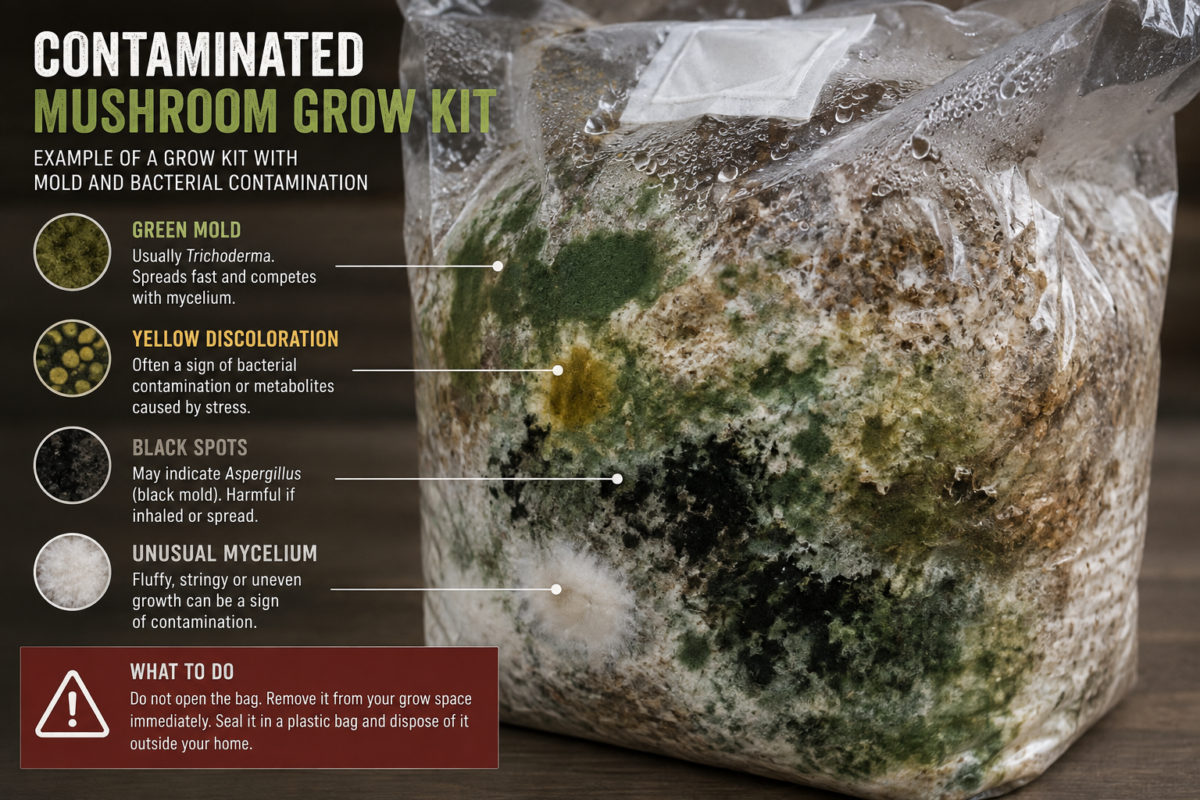
Segni comuni di contaminazione dei kit per la coltivazione dei funghi
Alcuni segnali di allarme meritano maggiore attenzione rispetto ad altri. In particolare, la rapida diffusione di colori chiaramente diversi dal normale micelio bianco può indicare la presenza di microrganismi concorrenti.
1. Muffa verde
La crescita di muffa è uno dei segnali di allarme più evidenti di contaminazione dei kit per la coltivazione dei funghi.
Un contaminante comune che si riscontra nella coltivazione dei funghi è Trichoderma, un genere di muffa in grado di competere in modo aggressivo con il micelio dei funghi.
Inizialmente può apparire pallido o bianco, per poi assumere una caratteristica colorazione verde man mano che vengono prodotte le spore.
Diffidate in particolare quando notate una macchia verde:
- Diventa più grande col passare del tempo
- Ha un aspetto polveroso
- Si sviluppa indipendentemente dal micelio esistente
- Cambia rapidamente da bianco a verde
Una colonia di muffa chiaramente verde e in espansione è molto diversa dalle macchie blu-verdi che il micelio dei funghi può talvolta sviluppare.
Muffa verde contro lividi blu
Questa distinzione è fonte di molte preoccupazioni inutili.
Il micelio e il tessuto fungino possono talvolta lividi blu a seguito di pressione fisica, disidratazione o manipolazione. Ciò non significa necessariamente che il kit di coltivazione sia contaminato.
Le macchie di colore blu, grigio-blu o verde-blu tendono a rimanere parte integrante del micelio esistente, anziché svilupparsi in una colonia separata dall’aspetto lanuginoso o polveroso.
La muffa verde, invece, tende a comportarsi come un organismo in fase di espansione attiva.
In caso di dubbio, evitare di toccare o disturbare la zona interessata e osservare se il suo aspetto subisce cambiamenti.
2. Muffa nera o formazione nera insolita
I punti neri richiedono maggiore cautela.
Esistono diverse specie di muffe in grado di produrre spore o colonie di colore scuro, pertanto è difficile identificare in modo affidabile un agente contaminante basandosi esclusivamente sul colore.
Anche le piccole aree scure non sono necessariamente indice di contaminazione. Gli ingredienti del substrato possono essere naturalmente di colore scuro, e le ombre o l’umidità possono farli apparire ancora più scuri attraverso il contenitore.
Tuttavia, nuove formazioni nere, lanuginose, polverose o in espansione non dovrebbero essere considerate micelio normale.
Se sospetti la presenza di muffa scura, evita di aprire il kit di coltivazione o di annusarlo da vicino.
3. Alterazione del colore verso il giallo e metaboliti del micelio
La colorazione gialla è più complessa perché... non implica automaticamente una contaminazione.
Un micelio sano può talvolta produrre goccioline giallastre o ambrate, comunemente denominate dai coltivatori metaboliti del micelio.
Questi fenomeni possono diventare più evidenti quando il micelio è sottoposto a stress ambientale.
Una piccola quantità di liquido giallo o ambrato presente intorno a un micelio bianco, per il resto sano, non è quindi necessariamente un motivo per gettare via un kit di coltivazione.
Tra i segnali più preoccupanti figurano un notevole scolorimento accompagnato dal deterioramento del substrato, una crescita anomala o un odore sgradevole.
4. Escrescenze rosa, rosse o arancioni
La comparsa inattesa di escrescenze di colore rosa, rosso o arancione intenso va generalmente considerata con cautela.
Questi colori non sono tipici di un organismo sano Psilocybe cubensis micelio e potrebbe indicare che un altro microrganismo si è insediato nel substrato.
Non cercare di identificare una sostanza contaminante sconosciuta semplicemente toccandola o annusandola.
5. Odore insolito o sgradevole
Un kit per la coltivazione dei funghi di buona qualità emana in genere un leggero odore di terra o di funghi.
Odori forti, acidi, di marcio, di fermentato o comunque sgradevoli possono indicare la presenza di attività batterica o microbica.
Non aprire intenzionalmente un kit di coltivazione sigillato solo per annusarlo.
Se si rileva un odore anomalo senza manomettere il kit, considerarlo come un’ulteriore prova nella valutazione delle sue condizioni.
La condensa non è contaminazione
È molto comune che all’interno di un sacco da coltivazione si formino goccioline d’acqua.
Le condizioni di coltivazione calde e umide provocano naturalmente la formazione di condensa quando l’umidità evapora dal substrato e si deposita sulla plastica, più fredda.
La condensa di per sé, quindi, non non indicano la presenza di contaminazione.
Lo stesso vale per l'umidità sulle pareti di un sacchetto da coltivazione o di un contenitore.
Invece di concentrarti sulle goccioline d'acqua, osserva cosa sta succedendo all’interno e sulla superficie del substrato.
Quella sostanza bianca e soffice di solito non è muffa
Un altro problema che si presenta spesso è la presenza di una patina bianca, spessa e soffice.
Poiché molte persone associano la crescita di una sostanza soffice alla muffa, il micelio sano viene talvolta erroneamente identificato come contaminazione.
Il micelio sano dei funghi può presentarsi sotto forma di strutture sottili simili a filamenti o di una massa bianca molto densa.
La crescita bianca diventa più sospetta quando presenta caratteristiche chiaramente diverse da quelle del micelio già presente o è rapidamente seguita da una colorazione verde, nera, rosa o di altro tipo anomala.
Semplicemente essere Il fatto che sia bianco e soffice non è sufficiente per diagnosticare una contaminazione.
Perché i kit per la coltivazione dei funghi si contaminano?
La contaminazione può verificarsi in diverse fasi della coltivazione.
Una produzione professionale richiede condizioni controllate, poiché nel nostro ambiente sono naturalmente presenti microrganismi indesiderati.
Una volta che il kit di coltivazione è stato consegnato al coltivatore, i rischi di contaminazione possono aumentare a causa di manipolazioni superflue o di esposizione.
Tra i fattori di rischio più comuni figurano:
- Toccare il substrato senza motivo
- Estrazione del substrato dal suo contenitore originale
- Utilizzo di mani o strumenti non puliti
- Collocare il kit in un ambiente sporco
- Manipolazione eccessiva
- Imballaggio danneggiato
- Conservazione non corretta
- Introduzione di acqua o attrezzature contaminate
È quindi importante seguire le istruzioni fornite con il kit di coltivazione, anche quando un altro metodo trovato online sembra simile.
I diversi kit di coltivazione possono prevedere l'uso di substrati, livelli di umidità e metodi di coltivazione diversi, pertanto le istruzioni destinate a un tipo di kit potrebbero non essere adatte a un altro.
Prodotti utilizzati in questa sede
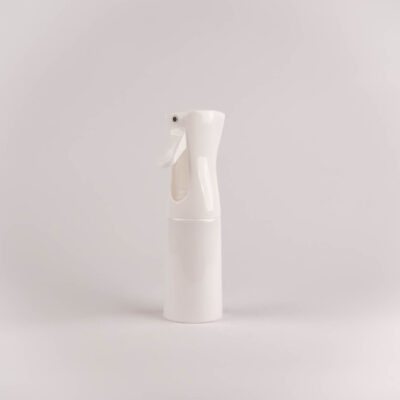


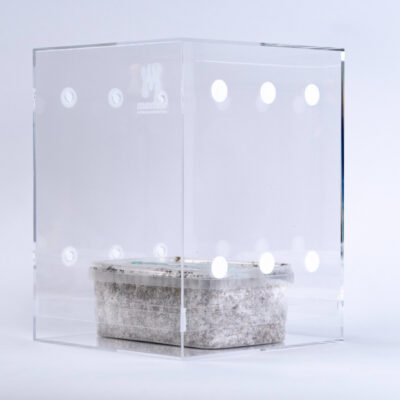
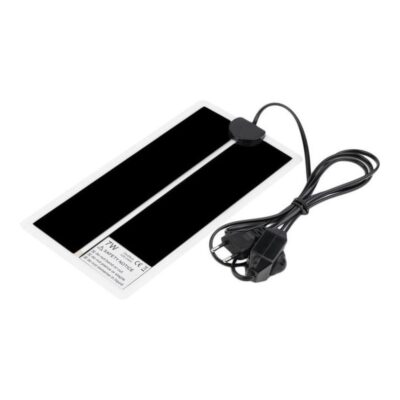

✓ In magazzino
Cosa fare se si sospetta una contaminazione?
Primo: Non buttare via subito il kit di coltivazione.
Molti casi di apparente contaminazione si rivelano poi essere semplicemente lividi, metaboliti, colorazione del substrato o micelio del tutto normale.
Ispeziona invece attentamente il kit di coltivazione senza aprirlo o manometterlo inutilmente.
Guarda:
- Il colore dell'area sospetta
- Dove ha avuto origine l'area
- Che si tratti di diffondere
- Che abbia un aspetto polveroso o sfocato
- Se il micelio circostante sembra ancora sano
- Se il suo aspetto cambia nel corso del tempo
Scattare fotografie nitide può anche facilitare notevolmente la valutazione.
Per Kit di coltivazione Mondo, fotografie scattate dall'alto e da ciascun lato del contenitore sono particolarmente utili perché la contaminazione non è sempre visibile dall’alto.
Non sei sicuro che il tuo kit di coltivazione sia contaminato?
Non tutti i colori insoliti, le macchie o i cambiamenti presenti nel tuo kit di coltivazione indicano necessariamente una contaminazione. Usa il Guida alla risoluzione dei problemi di Mondo per verificare ciò che stai osservando e individuare la causa più probabile in base alle condizioni del tuo kit di coltivazione.
Guida alla risoluzione dei problemi
Problemi con il tuo grow kit, grow bag, tartufi magici, microdosaggio o coltura liquida?
Analizza la tua situazione passo dopo passo e trova una soluzione mirata. Non sai con certezza se si tratta di una contaminazione? Ti indirizzeremo al servizio clienti, dove potrai caricare una foto.


Cosa non fare in caso di sospetta contaminazione di un kit di coltivazione
Uno degli errori più gravi è cercare di “riparare” immediatamente un kit di coltivazione.
Evitate di scavare nel substrato, di asportare le parti sospette o di rimuovere il substrato dal suo contenitore al solo scopo di ispezionarlo.
In questo modo si rischia di introdurre ulteriore contaminazione, di danneggiare il micelio sano e di rendere più difficile stabilire cosa sia realmente accaduto.
Se si nota una evidente formazione di muffa, isolare il kit di coltivazione dagli altri progetti di coltivazione ed evitare di maneggiare inutilmente il materiale colpito.
È possibile salvare un kit per la coltivazione di funghi contaminato?
Dipende da cosa sta succedendo effettivamente.
Se quella che sembra una contaminazione è in realtà solo un livido, metaboliti o micelio normale, non c’è nulla da “salvare”, perché il kit di coltivazione potrebbe essere perfettamente sano.
Una vera e propria contaminazione da muffa è tutta un’altra cosa. Una volta che un organismo concorrente ha colonizzato parte del substrato, la semplice rimozione della parte visibile non garantisce che l’organismo sia stato eliminato.
La crescita visibile potrebbe rappresentare solo una parte di ciò che sta avvenendo all’interno del substrato.
Ecco perché la prevenzione e l’individuazione precoce sono preferibili al tentativo di recuperare un substrato fortemente contaminato.
Come ridurre il rischio di contaminazione
Una buona igiene e una manipolazione ridotta al minimo contribuiscono notevolmente a ridurre il rischio di contaminazione dei kit per la coltivazione dei funghi.
Prima di utilizzare un kit di coltivazione, lavati accuratamente le mani e assicurati che l'area circostante sia ragionevolmente pulita.
Ma soprattutto, Segui le istruzioni pensate appositamente per il tuo kit di coltivazione.
Non modificare il substrato, non rimuoverlo dal suo contenitore né aggiungere altri materiali, a meno che il metodo di coltivazione non lo richieda espressamente.
La coltivazione dei funghi spesso premia la pazienza. Aprire, toccare e regolare continuamente un kit di coltivazione può causare più problemi di quanti ne risolva.
Micelio sano vs contaminazione: un rapido confronto
| Firma | Di solito in buona salute | Possibile contaminazione |
|---|---|---|
| Formazione di colore bianco brillante | ✓ | |
| Micelio bianco e soffice | ✓ | A volte |
| Lividi blu o blu-grigi | ✓ | |
| Piccole goccioline color ambra o gialle | ✓ | A volte |
| Condensa sul sacco di coltivazione | ✓ | |
| Espansione della crescita polverosa verde | ✓ | |
| Nuova formazione nera, lanuginosa o polverosa | ✓ | |
| Escrescenza insolita di colore rosa o rosso | ✓ | |
| Forte odore acido o di marcio | ✓ | |
| Colorazione anomala in rapida diffusione | ✓ |
Nessun singolo segno dovrebbe mai essere considerato una diagnosi definitiva. È necessario valutare l’aspetto complessivo e lo sviluppo del kit di coltivazione.
Quando è opportuno contattare Mondo?
Se stai utilizzando un kit di coltivazione Mondo e non sei sicuro che sia contaminato, non iniziare a smontare il substrato.
Scatta invece diverse fotografie nitide.
Per una valutazione ottimale, scattare una foto:
Questo fornisce al team di Mondo molte più informazioni rispetto a una singola fotografia in primo piano e rende più facile distinguere la contaminazione dal normale sviluppo del micelio.
Pensieri finali
Non tutti i kit per la coltivazione di funghi dall'aspetto strano sono contaminati.
Durante uno sviluppo altrimenti normale possono verificarsi la presenza di micelio bianco e soffice, condensa, metaboliti gialli e macchie blu. Comprendere queste differenze può evitare che i kit di coltivazione sani vengano scartati inutilmente.
I segnali di allarme più evidenti sono generalmente nuova crescita anomala in fase di rapida diffusione, in particolare le colonie di colore verde, nero, rosa o rosso, soprattutto se accompagnate da segni di deterioramento o da un odore insolito.
In caso di dubbi, intervieni il meno possibile sul kit di coltivazione e documenta ciò che osservi con fotografie chiare. Puoi anche utilizzare la guida alla risoluzione dei problemi di Mondo riportata sopra per identificare i problemi di coltivazione più comuni.
Prima di intervenire è necessario identificare correttamente il fungo e, nella coltivazione dei funghi, la pazienza è spesso uno degli strumenti più utili a disposizione.
Coltivazione pulita con Mondo
Ogni prodotto Mondo è accompagnato da un manuale dettagliato disponibile sul nostro sito, e gli ordini vengono spediti in modo discreto con tracciabilità.
Acquista attrezzi per la coltivazioneDomande frequenti sulla contaminazione dei kit per la coltivazione dei funghi
La contaminazione si manifesta spesso sotto forma di una strana proliferazione di colore verde, nero, rosa o rosso che si diffonde sul substrato. Anche un odore acido o sgradevole può essere un segnale di allarme. Il micelio bianco, la condensa e le macchie bluastre non sono necessariamente segni di contaminazione.
Di solito no. Il micelio sano dei funghi può presentarsi naturalmente denso, soffice o simile al cotone. Prima di ipotizzare una contaminazione, verifica la presenza di cambiamenti di colore, odori insoliti e una crescita anomala che si diffonde rapidamente.
La presenza di una patina verde e polverosa che continua a diffondersi è un chiaro indizio di contaminazione da muffa. Non confonderla con le macchie blu o grigio-blu che possono formarsi naturalmente nel micelio della Psilocybe.
Non necessariamente. Un micelio sano può produrre metaboliti di colore giallo o ambrato, soprattutto quando è sottoposto a stress ambientale. La presenza di piccole quantità non è automaticamente indice di una contaminazione del kit di coltivazione.
Evita di aprire, toccare o rimuovere il substrato senza motivo. Ispeziona attentamente il kit e scatta foto nitide dall’alto, dai lati e dell’area sospetta. Se possiedi un kit di coltivazione Mondo, contatta Mondo allegando queste foto in modo che possa essere valutato lo stato del kit.