




 Variedades
 Guías
Guías Herramientas
 Soporte



Noticias
Polvos de setas medicinales: Reishi, chaga, melena de león y cordyceps
Reishi, chaga, lion’s mane and cordyceps are the four mushrooms you see most often as powders and extracts. They have a long history in East Asian and Northern European folk traditions and are now sold as food supplements, coffee alternatives and tinctures. Research into their compounds is active, but most of it has been done in the lab or on animals, and none of these mushrooms has an approved health claim in the European Union.
What are medicinal mushroom powders?
A mushroom powder is either the dried and ground fruiting body or mycelium, or an extract made with hot water and/or alcohol. Extracts are more concentrated and are usually standardised on a group of compounds, most often beta-glucans (polysaccharides found in the cell walls of fungi). Plain powders are cheaper but contain more indigestible fibre. The label should tell you which part of the mushroom was used and whether the product is an extract.
Reishi (Ganoderma lingzhi)
Reishi is a hard, shiny, reddish-brown bracket fungus that grows on hardwood. It is too woody to eat, which is why it has traditionally been prepared as a tea or decoction. Reishi contains beta-glucans and triterpenes, the bitter compounds that give it its taste. Most studies on reishi are laboratory or animal studies; human trials are small and their results are mixed.
Chaga (Inonotus obliquus)
Chaga is not a mushroom cap but a black, cracked growth (a sclerotium-like mass) on birch trees in cold climates such as Scandinavia, the Baltics and Russia. It has a long tradition as a tea in those regions. Chaga is rich in melanin-like pigments and polyphenols. Because chaga also contains a lot of oxalate, people with kidney problems are generally advised to be careful with large or long-term use.
Lion’s mane (Hericium erinaceus)
Lion’s mane is easy to recognise by its white, hanging spines. Unlike reishi and chaga it is also a good edible mushroom, often compared to crab or lobster when fried. It contains hericenones and erinacines, compounds that researchers study for their effect on nerve cells. Those studies are mostly in cell cultures and animals, so they do not show what a supplement does in people.
Cordyceps (Cordyceps militaris and C. sinensis)
Wild cordyceps sinensis grows on caterpillar larvae in the Tibetan highlands and is rare and expensive. Almost all cordyceps on the market is therefore Cordyceps militaris, which can be cultivated on grain or in liquid, or a fermented mycelium product. Cordyceps contains cordycepin and adenosine. Human research into its effect on endurance is limited and the results are inconsistent.
What can a seller claim about mushroom supplements?
In the EU, food supplements may only carry health claims that are on the EU register of authorised claims (Regulation (EC) No 1924/2006). No claims for reishi, chaga, lion’s mane or cordyceps have been authorised. Products that promise to boost immunity, prevent disease or improve memory are making claims the law does not allow. Treat them with suspicion, and talk to a doctor before combining mushroom extracts with medication, especially blood thinners or diabetes medication.
How do you choose a mushroom powder?
- Check whether the product uses the fruiting body, the mycelium or both.
- Look for an extraction method on the label (hot water, alcohol or dual extraction).
- Prefer products that state a beta-glucan content measured by an independent lab.
- Be wary of products that list health promises instead of contents.
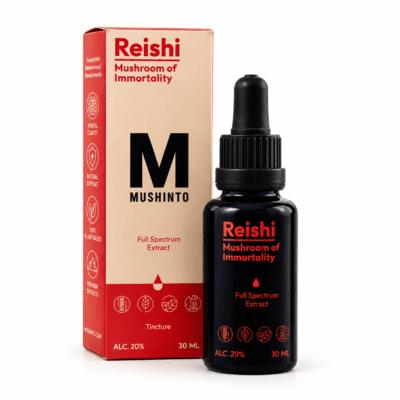
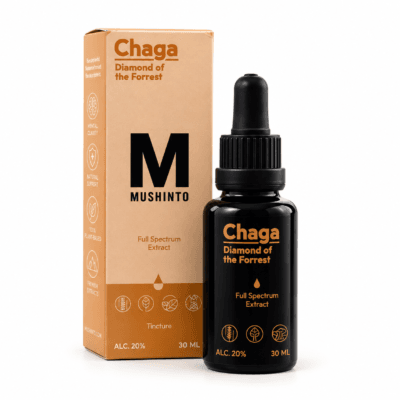
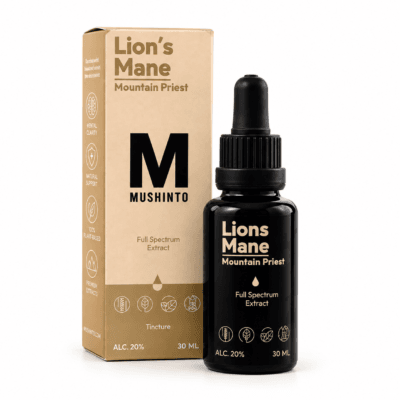
Mondo sells reishi, chaga and lion’s mane as tinctures. They are food supplements, not medicines.
Productos utilizados aquí
✓ En stock
✓ En stock
✓ En stock
Mushroom tinctures from Mondo
Mondo’s mushroom tinctures are food supplements, not medicines. Orders ship discreetly with tracking.
View mushroom tinctures