






 Strains
 Guides
 Tools
 Support






Magic Truffles
Psilocybe mexicana: The Species Behind Mexicana Truffles
Psilocybe mexicana is a small psilocybin mushroom from Mexico and Central America that forms sclerotia, which is why most “Mexicana” magic truffles come from this species. It was described by the French mycologist Roger Heim in 1957, and Albert Hofmann isolated psilocybin and psilocin from cultivated material of this species shortly after. Confusingly, “Mexicana” is also the name of a Psilocybe cubensis strain, which is a different fungus.
Where does Psilocybe mexicana come from?
Psilocybe mexicana grows in Mexico and parts of Central America, including Guatemala, El Salvador and Costa Rica. It fruits in humid grassland, among moss along roadsides and at the edges of fields bordering deciduous forest, mainly in the rainy season.
The mushroom has a long cultural history. It is one of the species known to the Aztecs as teonanácatl and has been used in Mesoamerican rituals for centuries. Western science became aware of it in the 1950s through the expeditions of R. Gordon Wasson and Roger Heim.
Why is Psilocybe mexicana important in science?
Psilocybe mexicana is important because it was the source of the first pure psilocybin. Heim grew the species in culture in Paris and sent material to Albert Hofmann at Sandoz in Basel. Hofmann isolated and identified psilocybin and psilocin from it in 1958. Almost all later research on psilocybin started there.
What does Psilocybe mexicana look like?
Psilocybe mexicana is a small, slender mushroom, much smaller than the cubensis in grow kits.
| Psilocybe mexicana | Psilocybe cubensis | |
|---|---|---|
| Cap | 0.5 to 2 (rarely 3) cm, conical to bell-shaped, ochre to brown | 2 to 10 cm, convex to flat |
| Stem | Thin and fragile | Thick and sturdy |
| Habitat | Grassland, moss, field edges | Dung and rich soils |
| Sclerotia (truffles) | Yes | No |
| Mainly grown for | Truffles | Mushrooms |
Psilocybe mexicana or the “Mexicana” cubensis strain?
There are two different things sold under the name Mexicana, and it pays to know which one you have:
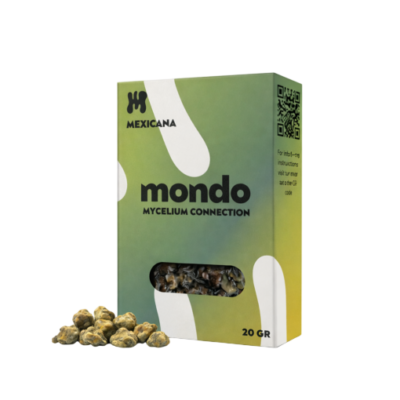
- Psilocybe mexicana is a separate species. It forms truffles and is grown for its sclerotia. At Mondo this is the Mexicana – Magic Truffle Liquid Culture Syringe and the Mexicana – Magic Truffles.
- Mexicana (Psilocybe cubensis) is a strain of cubensis that carries a geographic name. It does not form truffles and is grown for mushrooms, like Golden Teacher or B+. At Mondo this is the Mexicana – Psilocybe Cubensis liquid culture, spore syringe and spore vial.
If you want to grow truffles, you need the truffle species. A cubensis culture will never form sclerotia, however long you wait.
Products used here
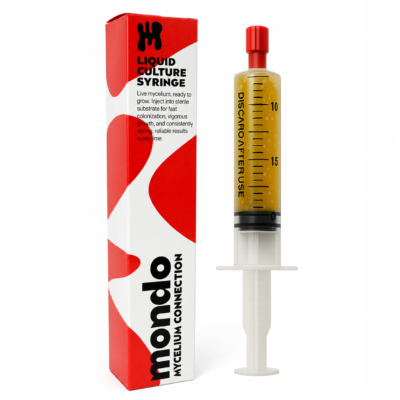


How is Psilocybe mexicana grown for truffles?
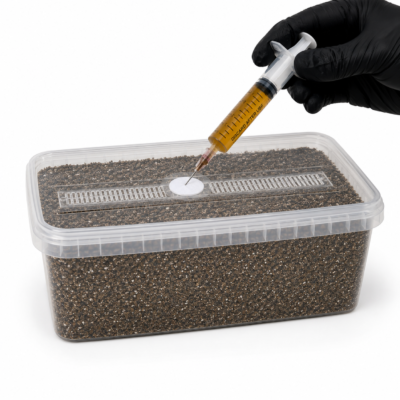
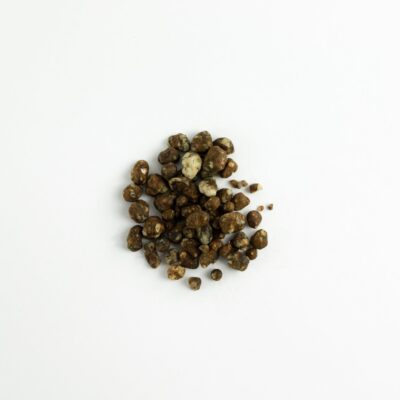
Psilocybe mexicana is grown for truffles by inoculating a sterile, nutritious substrate with a culture and leaving it closed and dark for months. The mycelium colonizes the substrate first and then forms sclerotia, small brown knots that harden as they mature. The process is described step by step in our guide on how to grow magic truffles.
A liquid culture is the practical starting point. It skips germination and starts from a line that is known to form sclerotia. Our comparison of liquid culture vs spore syringe explains the difference.
Darkness is the trigger
Light and fresh air push the species toward mushrooms. If you want truffles, keep the bag closed and in a dark, warm place, and resist the urge to open it.
How does mexicana compare to tampanensis?
Mexicana and tampanensis are the two best-known truffle species. Both are small mushrooms that form sclerotia, but they come from different places: mexicana from Mexico and Central America, tampanensis from a single find near Tampa, Florida, in 1977. Read more in our article on Psilocybe tampanensis. For growers, both work with the same method; the specific culture matters more than the species name.
Check local rules
Fresh truffles are not covered by the Dutch Opium Act, but in many countries psilocybin truffles and mushrooms are controlled. Check the law where you live.
Mexicana from Mondo
Every Mondo product comes with a step-by-step manual on our site, and orders ship discreetly with tracking.
Shop truffle liquid culturesQuestions about Psilocybe mexicana
Most Mexicana truffles are the sclerotia of Psilocybe mexicana. The name on the product refers to the species.
No. Psilocybe cubensis does not form sclerotia. You need a Psilocybe mexicana culture.
Yes. In light and fresh air it can fruit small, slender mushrooms. In truffle cultivation those conditions are avoided.
Roger Heim described it in 1957, after the expeditions with R. Gordon Wasson in Mexico.
In the fridge, dry and sealed. See how to store magic truffles for details on shelf life and spoilage.