






 Strains
 Guides
 Tools
 Support


Growing Guides
Best Substrate for Psilocybe cubensis: Grain, Manure, Coir and More
There is no single best substrate for Psilocybe cubensis; the best results come from the right substrate for each stage. Sterilised grain feeds the mycelium during colonization, while a moisture-holding, low-nutrient bulk substrate such as coco coir with vermiculite supports fruiting. For most home growers, a ready-made sterilised substrate removes the hardest part: sterilising without contamination.
What does a cubensis substrate need to do?
A good substrate has to do four things at once:
No single material does all four perfectly, which is why cubensis growers combine materials.
How do the common substrates compare?
| Substrate | Role | Nutrition | Contamination risk | Notes |
|---|---|---|---|---|
| Rye, millet, wild bird seed, other grains | Colonization (spawn) | High | High if not sterilised properly | Needs pressure sterilisation |
| Brown rice flour with vermiculite (PF tek) | All-in-one cakes | Medium to high | Medium | Classic beginner method, small yields |
| Coco coir | Bulk substrate | Low | Low | Holds water well, needs pasteurisation |
| Vermiculite | Additive | None | Low | Improves water holding and structure |
| Gypsum | Additive | Minerals | None | Small amounts improve structure |
| Horse or cow manure | Bulk substrate | Medium | Higher | Cubensis grows on dung in nature, but prep is messy |
Grain
Grain is the most nutritious substrate and the usual choice for colonization. Rye and millet are popular because the kernels have a good size and hold moisture well. Grain must be sterilised, not just pasteurised, because its nutrients feed bacteria just as well as mycelium. At home that means a pressure cooker and careful technique.
Coco coir and vermiculite
Coco coir mixed with vermiculite, often called CVG when gypsum is added, is the standard bulk substrate. It contains little food, which makes it less attractive to contaminants, and holds plenty of water for fruiting. It is pasteurised rather than sterilised and mixed with already colonized grain.
Manure
Psilocybe cubensis grows on dung in the wild, so manure-based substrates work. They are richer than coir, which can mean larger flushes, but they need more preparation and carry more contamination risk. Most beginners skip manure.
Nutrition is not everything
A richer substrate does not automatically give a better harvest. Without good sterilisation and clean inoculation, the extra nutrients mostly benefit the contaminants.
Products used here


Why do many growers use ready-made sterilised substrate?
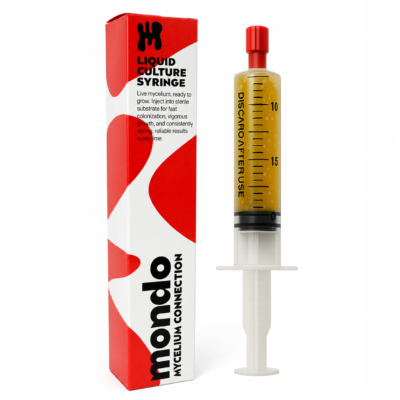
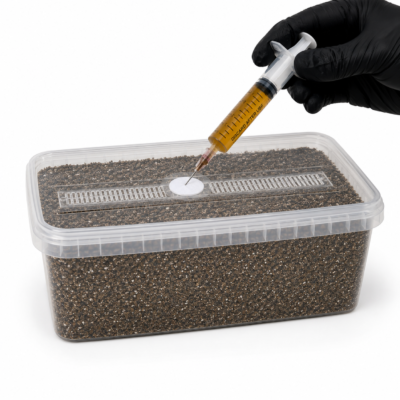
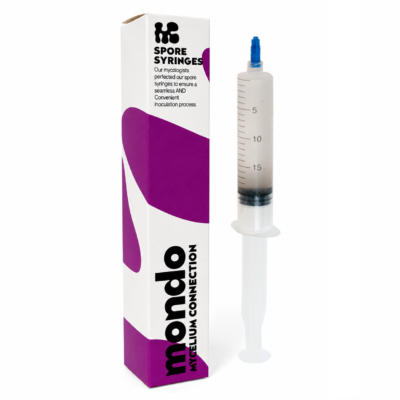
Ready-made sterilised substrate saves the step where home grows most often go wrong: getting a nutritious substrate truly sterile. Mondo’s sterilised substrate is prepared and sterilised under controlled lab conditions and sealed until you inoculate it with a spore syringe or liquid culture. It comes with a grow bag and a sealing sticker, in Medium (about 16 × 21 × 8 cm) and Large (about 22 × 21 × 9 cm). Keep it closed in the fridge and inoculate it within two weeks.
That leaves you with the parts you can control at home: clean inoculation, stable temperatures and patience. Our comparison of liquid culture vs spore syringe helps you choose what to inoculate with.
Which substrate is best for which strain?
All Psilocybe cubensis strains grow on the same substrates. Slower, denser strains such as Penis Envy benefit from the same substrate, just with more time. What differs between strains is speed and sensitivity, not the food they need. See our guide on how to grow Penis Envy for the slow end of the range.
Truffle-forming species such as Psilocybe tampanensis and Psilocybe mexicana are different. They are usually grown on a nutritious grain-based substrate that stays closed for months. Our guide on how to grow magic truffles explains why.
What are the most common substrate mistakes?
- Too wet. Standing water at the bottom of a bag or jar invites bacteria. The substrate should feel moist, not soggy.
- Too dry. Dry substrate colonizes slowly and gives small flushes.
- Pasteurising grain. Grain needs sterilisation; pasteurisation leaves too many bacterial spores alive.
- Opening too early. Colonization takes time. Every look inside the bag is a chance for contamination.
Sterilised substrate from Mondo
Every Mondo product comes with a step-by-step manual on our site, and orders ship discreetly with tracking.
View sterilised substrateQuestions about cubensis substrate
They do different jobs. Grain is for colonization, coir with vermiculite is for fruiting. Most methods use both.
No. Garden soil and potting compost are full of competing organisms. Cubensis needs a sterilised or pasteurised substrate.
Coco coir, vermiculite and gypsum: a common low-nutrient bulk substrate for cubensis.
That depends on the substrate, the temperature and the inoculant: spores or liquid culture. Liquid culture usually colonizes faster because the spores do not have to germinate first.
Not for a new grow. The nutrients are largely used up and the substrate is no longer sterile. Spent substrate can go on the compost heap.